1%
Stations · Coach the Coach
COACH THE COACH · THROW FAR

Coach the
whip.

Here's the one that trips coaches up: you don't teach a "proper throw," and you don't drill a rubber-band twist. You say "throw it as FAR as you can." The distance goal builds the whole hip-to-hand coil by itself — you physically can't throw far arm-only. The goal is the coach. This page teaches you to read a timed whip, and spot the arm-only throw.

▶ Run the station Where you are & what's next
1 · SEE IT

What good looks like.

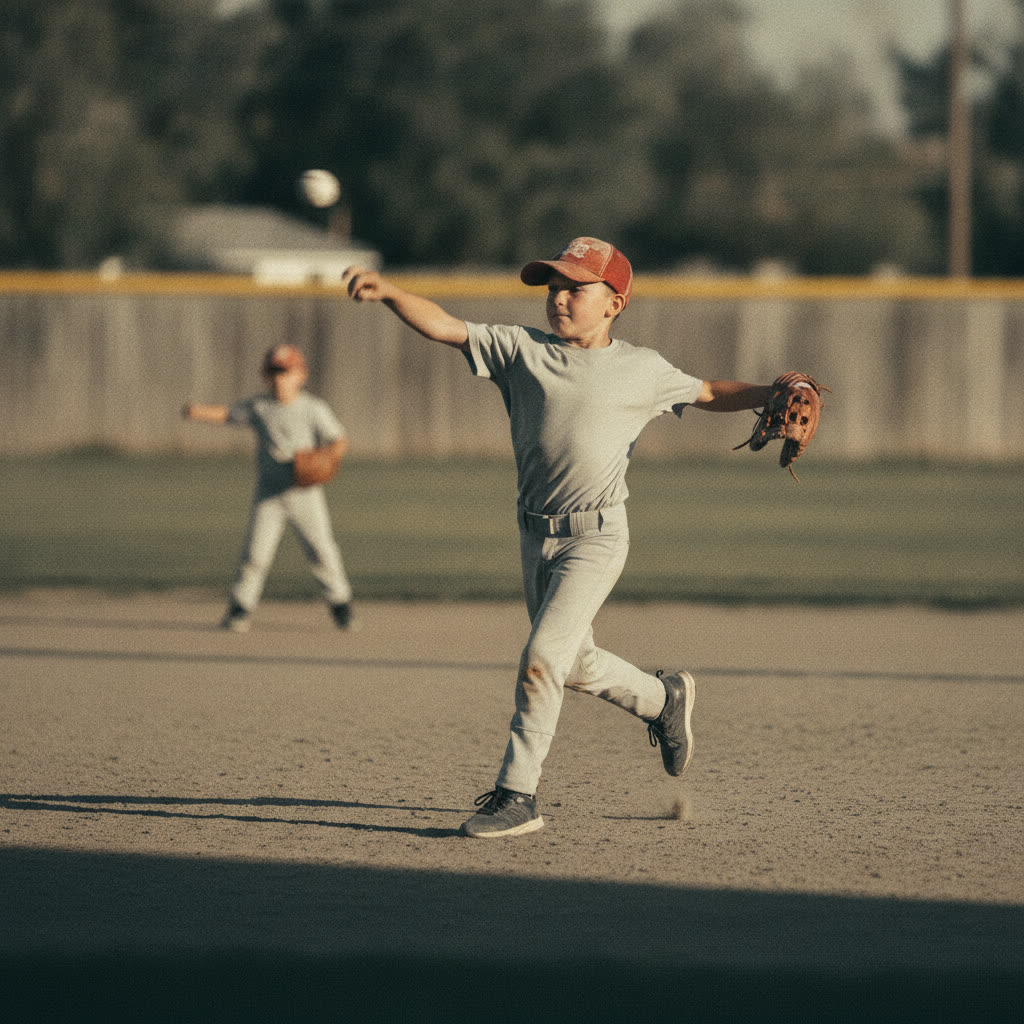
A good throw is a timed whip, not a hard arm-swing. It steps onto the opposite foot, the hips wind and lead the shoulder (separation), and the arm whips through last, with a full follow-through. The tell of good is timing, not force.

The climb runs from a two-hand chest push to a stepped overhand throw to the whip under any constraint — but it all sits on one thing: let it fly, both sides.

Throw far · the flow
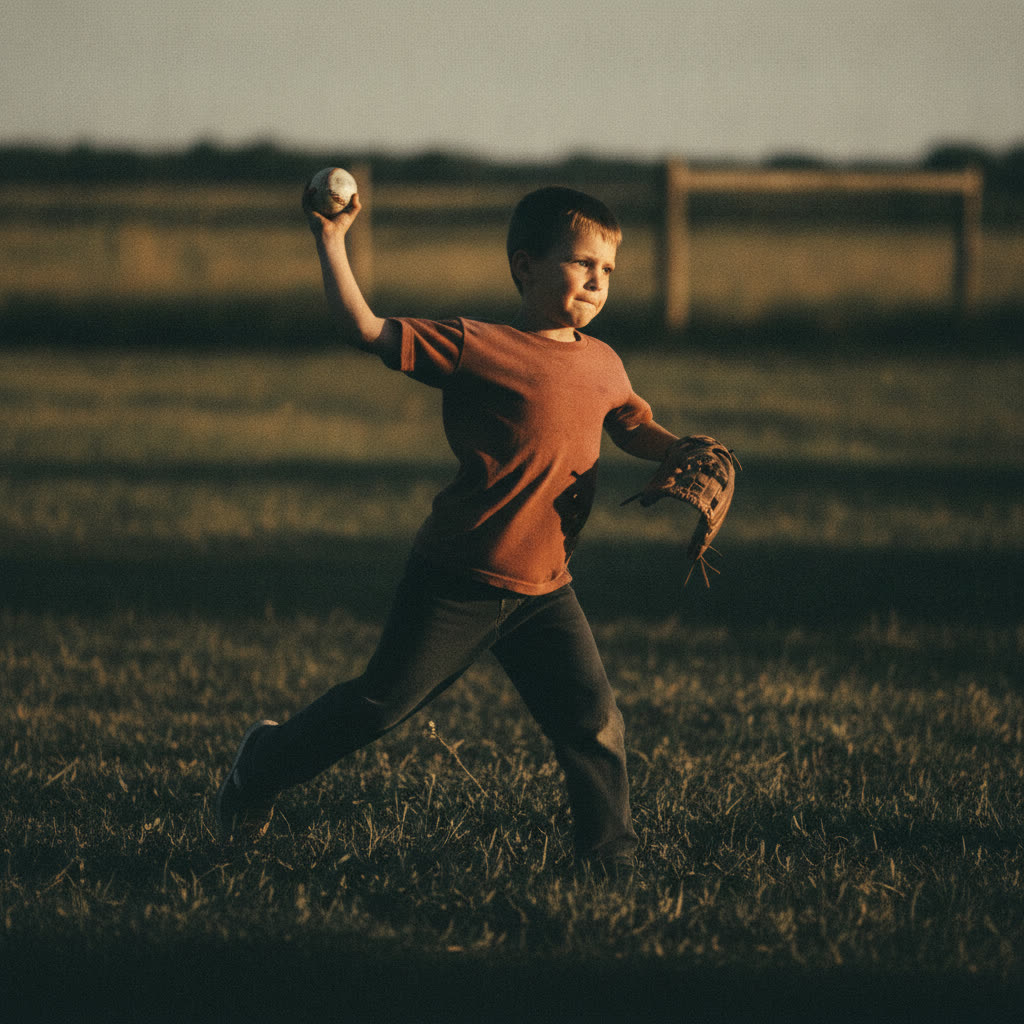
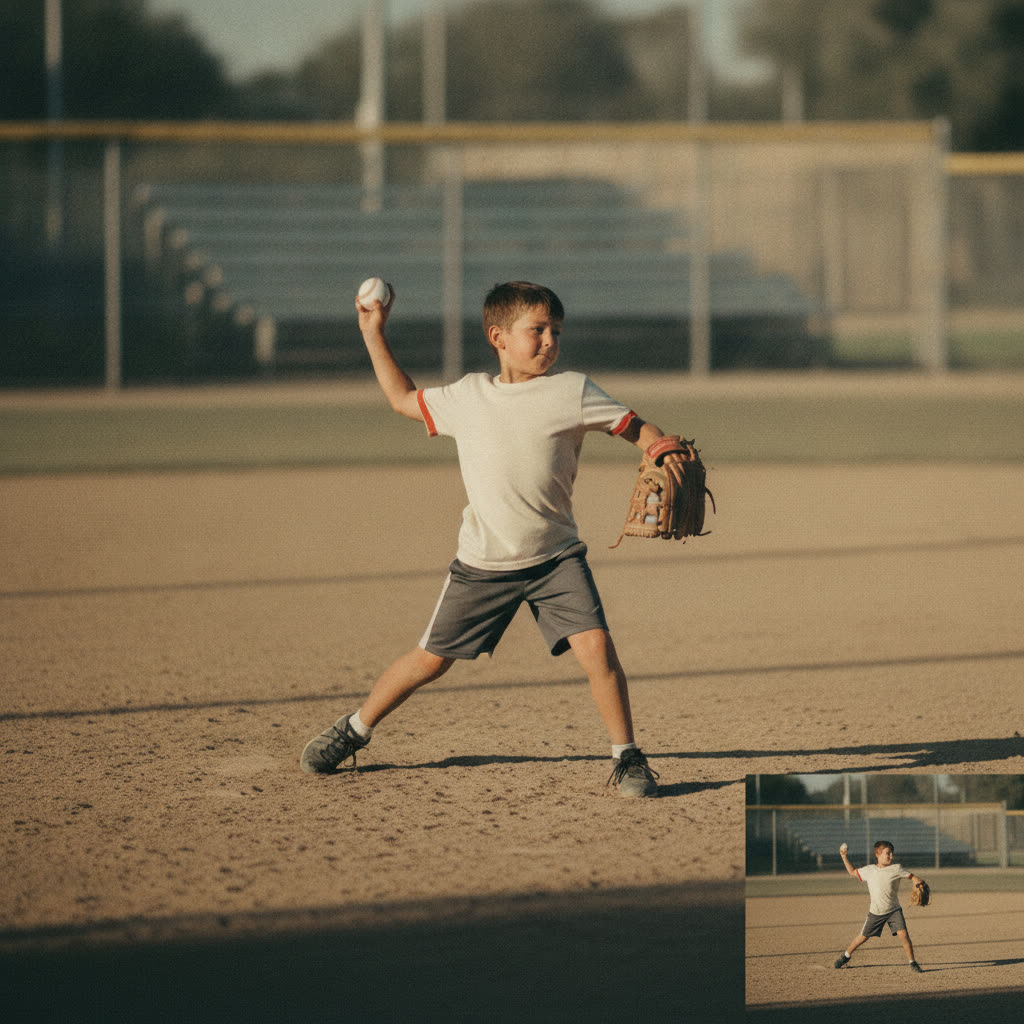
A child stepping and winding up to throw far A child mid-throw, hips leading the shoulder in a whip A child in a full follow-through after a throw
Step + wind

Good vs. the tell — train your eye.

Two faults you'll actually see. Spot them and you're coaching.

Child stepping onto the opposite foot, arm cocked, hips winding
Good · steps & winds
Steps onto the opposite foot, arm cocked, hips winding — coiled to throw far.
Child feet square and planted, throwing with just the arm
Watch · all arm, no step
Feet square and planted, torso frozen facing forward, throwing with just the arm.
Child throwing with hips rotating ahead of the shoulder
Good · the whip (hip leads)
Hips rotate ahead of the shoulder — a timed proximal-to-distal whip.
Child stepping onto the same-side foot as the throwing arm, cramped
Watch · wrong foot, no coil
Stepping onto the same-side foot as the throwing arm — square and cramped, no coil.
2 · RUN IT

The flow.

Setup

Anything to throw

Rocks at a lake, a ball in the yard, a beanbag — anything to throw and a bit of space. Free.

The play

Throw it far

Push the ball → overhand with a step → throw far, both sides. Let it fly. You're not teaching a form — you're setting a distance.

Dosage

Big throws, not reps

A handful of big throws — it's max-effort, not reps. A light ball for little ones so the throw stays fast, not a grind.

Make it a game

Give it a target

Distance contests, target practice, skip stones, whack a ball off a tee. The game sets the goal — you never say "twist harder."

THE SAFETY LINE

Light / no-bounce ball or beanbag for young kids (~1–2 lb). Clear the throwing lane — no one downrange, no windows. Cue "sequence it, let it fly," not "twist as hard as you can" — it's a timed whip, not a grind. And train both sides so the coil doesn't groove one-handed.

3 · COACH IT

Best practices.

The cue

"Throw it as FAR as you can — step with the opposite foot and let your belly lead." Mostly, just "farther." The goal builds the coil; you never coach joint angles.

Watch for

All-arm (stiff, frozen torso — no hip or belly) · no step · stepping with the same-side foot · only ever one arm/side. Coach the one that shows most.

The fix

"Step with the other foot, turn your belly to the target" — but mostly just "throw it FARTHER." The goal fixes the form on its own.

Parent traps

Over-coaching form / drilling an isolated "twist" (form-policing kills the whip — the goal coaches it) · only one side · a ball too heavy or bouncy for littles · cueing "twist as hard as you can" (it's timing, not a grind).

Keep it play

Rocks at the lake, skip stones, whack a ball off a tee, snowballs. Both sides. Light / no-bounce ball for little ones — then just let them throw at things.

4 · WHERE YOU ARE → WHAT'S NEXT

The climb.

One ladder for every age — a toddler heaves a beanbag, a 9-year-old whips it across the yard. Mastery moves you, never age. The tell that it's time to level up: the throw whips clean — step, hip, then arm, both sides. Then add one demand.

basePush a ball from the chest (no windup) → overhand throw WITH a step
challengeVisible hip-before-shoulder separation → a consistent proximal-to-distal whip
layerThe whip under a constraint — both sides, varied load, target, tempo
layerReactive / perturbed throw, both sides
layerThrowing on the move / off a run
TOO EASY? LEVEL UP

Add one at a time — the distance goal keeps doing the coaching, you keep raising it:

  • Throw at a target — aim for a bucket, a tree, a chalk circle; distance and accuracy together.
  • Other hand too — throw with the non-dominant arm; the whip is almost always grooved one-sided.
  • Heavier / farther — beanbag → ball → a rock across the lake; a touch more load or distance.
  • On the move — throw after a run-up or a shuffle step; add the footwork before the whip.
  • Both sides always — rotate throwing left and right through everything; build the coil evenly.

The goal keeps doing the coaching — you keep raising it.

What it unlocks — the one engine under all striking.

Own the whip, and every throwing, striking, rotational thing opens up.

Throw is the shared engine the same whip, only the implement changes
Baseball / softballTennisGolfCricketVolleyballHockeyBoxing
Rotation shows up in the coil behind power
Cutting & change-of-directionKickingSwinging anythingPowerful hips
For life a strong, durable rotational body
Throwing far & accuratelyPowerful hipsShoulder-elbow durability
THE WHOLE TRUTH · SO YOU DON'T OVERPROMISE

None of these is "just throw." The sport skill — the pitch, the serve, the swing — is learned IN the sport; we build the shared engine the sport runs on. Every foundation opens these same doors from a different side, and the play is where they combine — the test. And remember the whole reason it works: the distance goal coaches the coil — you never police the form.

5 · THE COACH'S CRAFT

Six rules that make you the coach.

1

Set a goal, not a joint angle

"Throw it farther" IS the coaching. Set the distance and the coil builds itself — you never name a joint.

2

Do it with them

A throwing contest — who gets it farther? A warm, together heave beats reps done as a chore, and they'll copy you.

3

Watch one thing

Usually the missing step or coil. Spot the loudest tell, not everything at once — that's overwhelming, not coaching.

4

Fix with the goal

"Farther," not "twist your torso 30°." The goal fixes the form; you never police joint angles.

5

Progress, not perfection

A big honest heave beats a pretty, weak one. Chase the distance, not a clean-looking form.

6

Both sides, always

The whip is almost always grooved one-handed — throw with the other hand too, every single time.

All six now live. Balance · Hang · Crawl · Carry · Jump & stick · Run the stations.