1%
Stations · Coach the Coach
COACH THE COACH · BALANCE & CURB-WALK

Coach the
balance.

You can't tell a child to balance better — balance isn't a thought, it's the body learning to trust the feet over the eyes. So you don't correct it. You set the line, spot one thing, and let them wobble on a soft surface. This page teaches you to read it — what good looks like, the one cue, the tells, and where it goes next.

▶ Run the station Where you are & what's next
1 · SEE IT

What good looks like.

Good balance floats. The eyes are up and soft (looking ahead, not at the feet), the body is tall and quiet, the arms drift out easily, and the walk is heel-to-toe and unhurried. The tell of a kid who owns it: they're not thinking about it.

The elite version isn't "stands still longest" — it's trusting the feet with the eyes closed, and recovering a wobble without a thought. That's the climb (section 4).

Balance · the flow
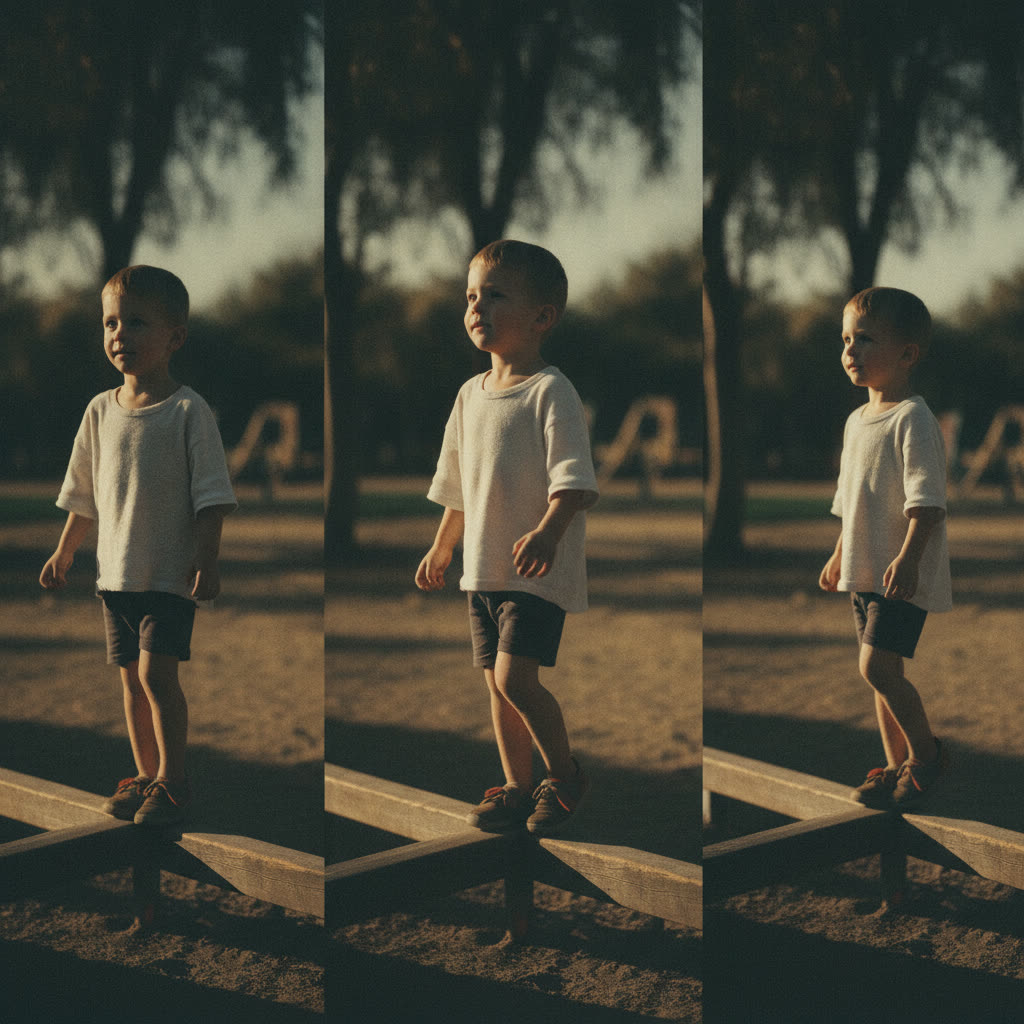
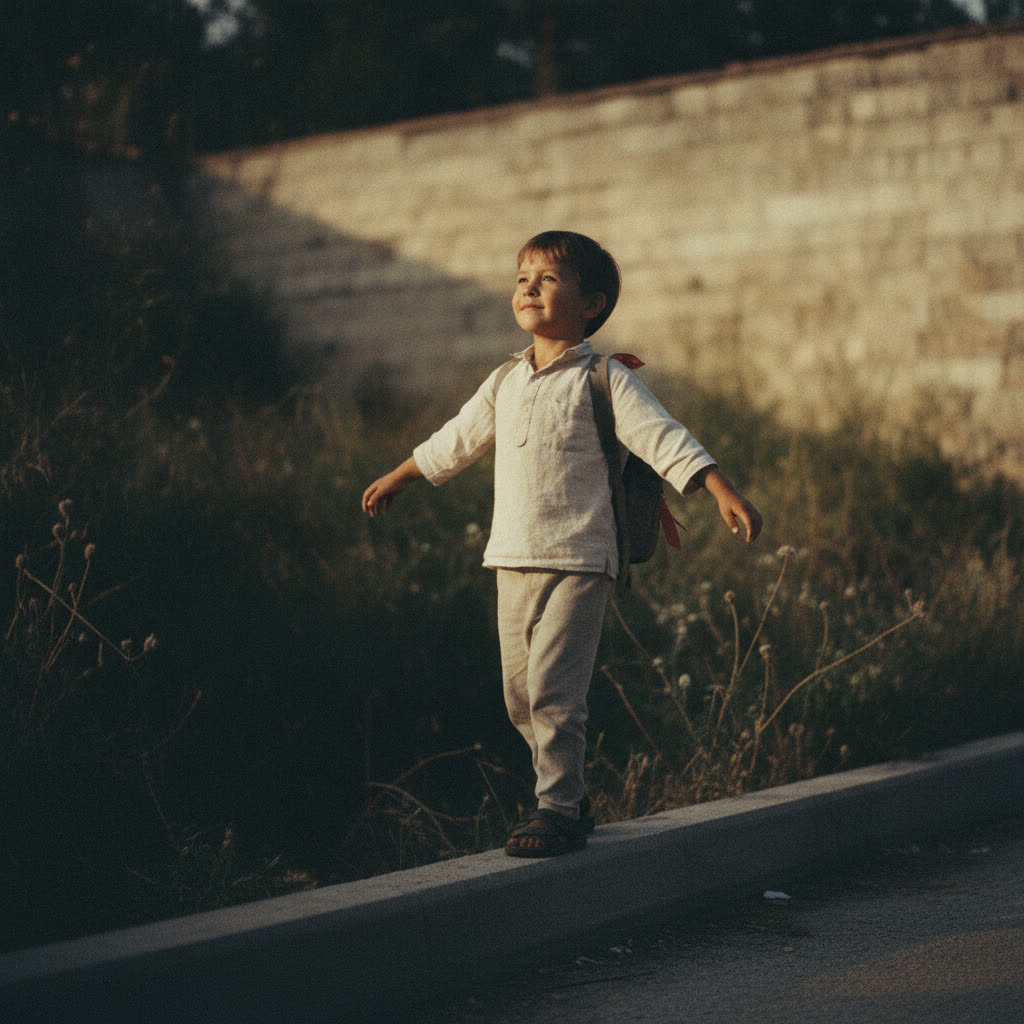
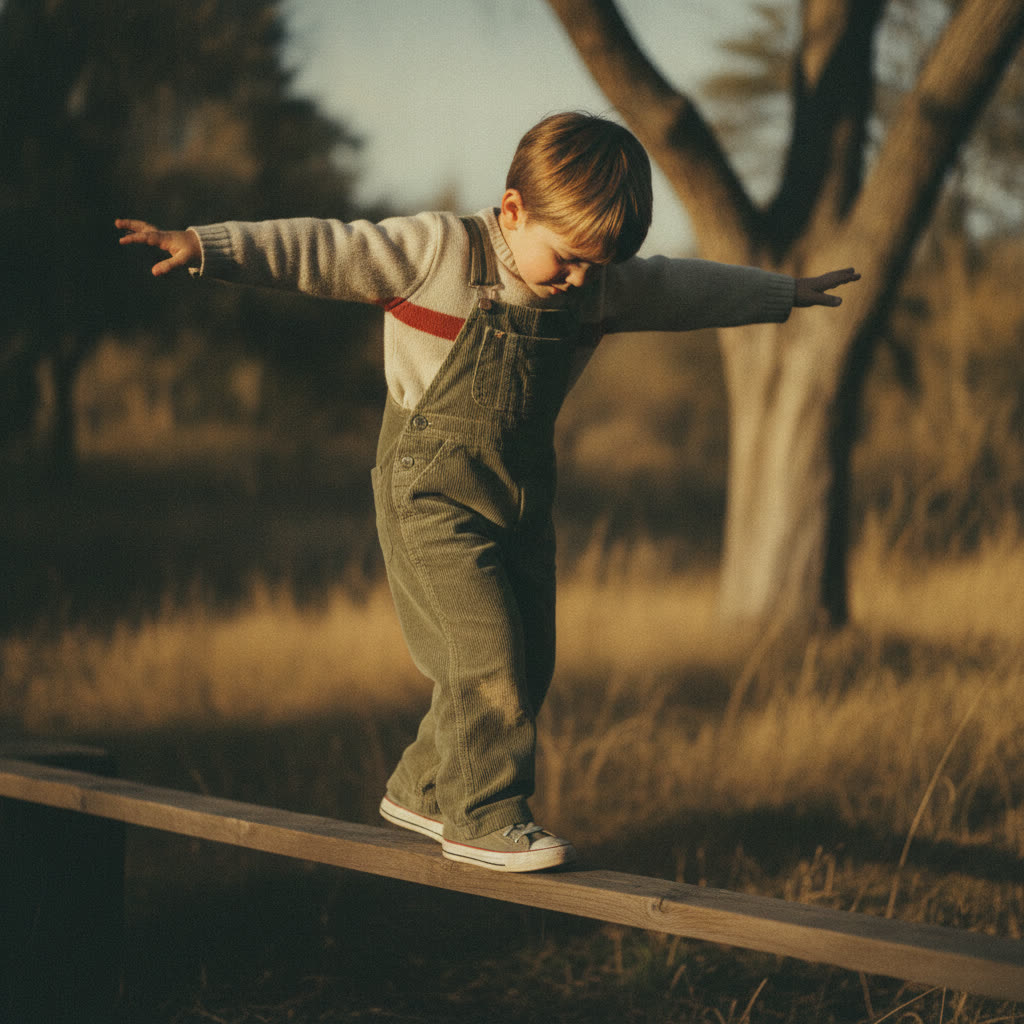
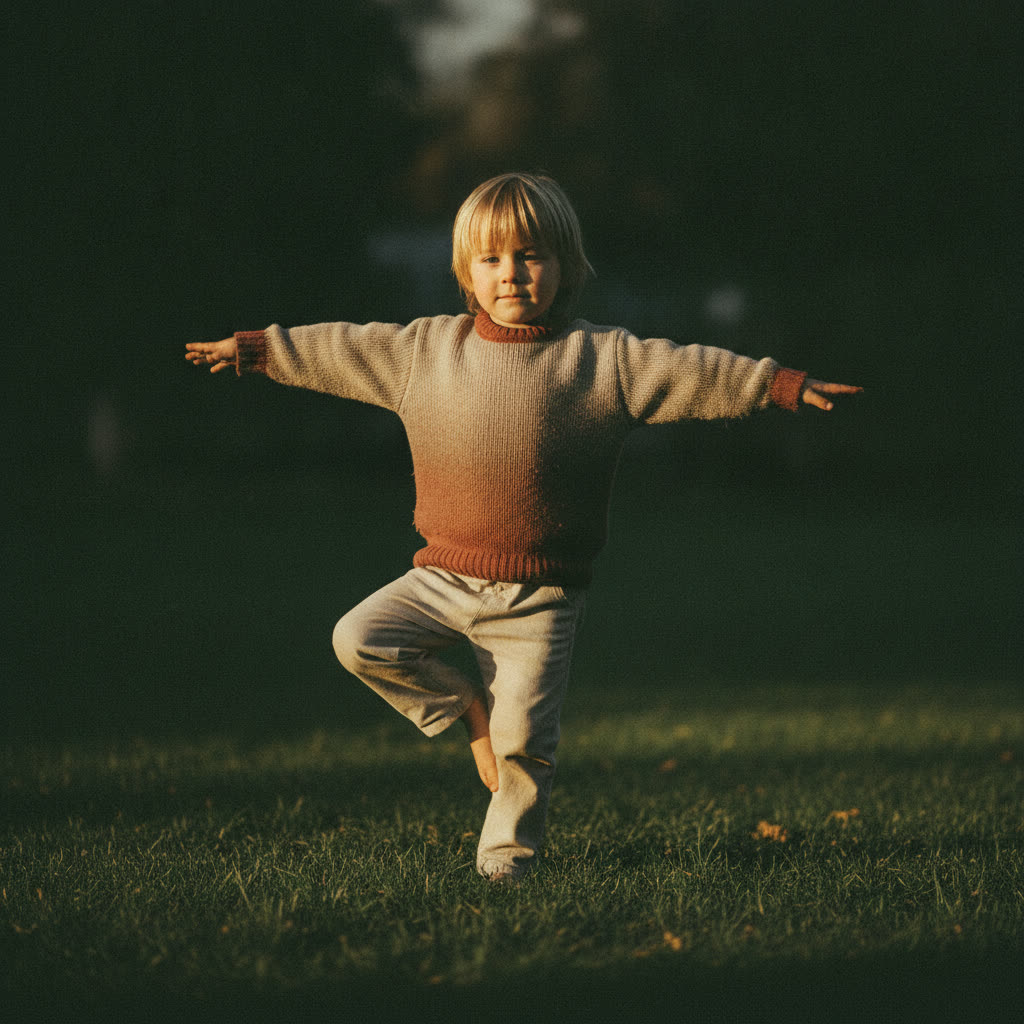
A child walking heel-to-toe along a curb, eyes up A child balancing on one leg A child walking a low beam
Curb like a tightrope · eyes up

Good vs. the tell — train your eye.

These are the two faults you'll actually see. Learn to spot them and you're coaching.

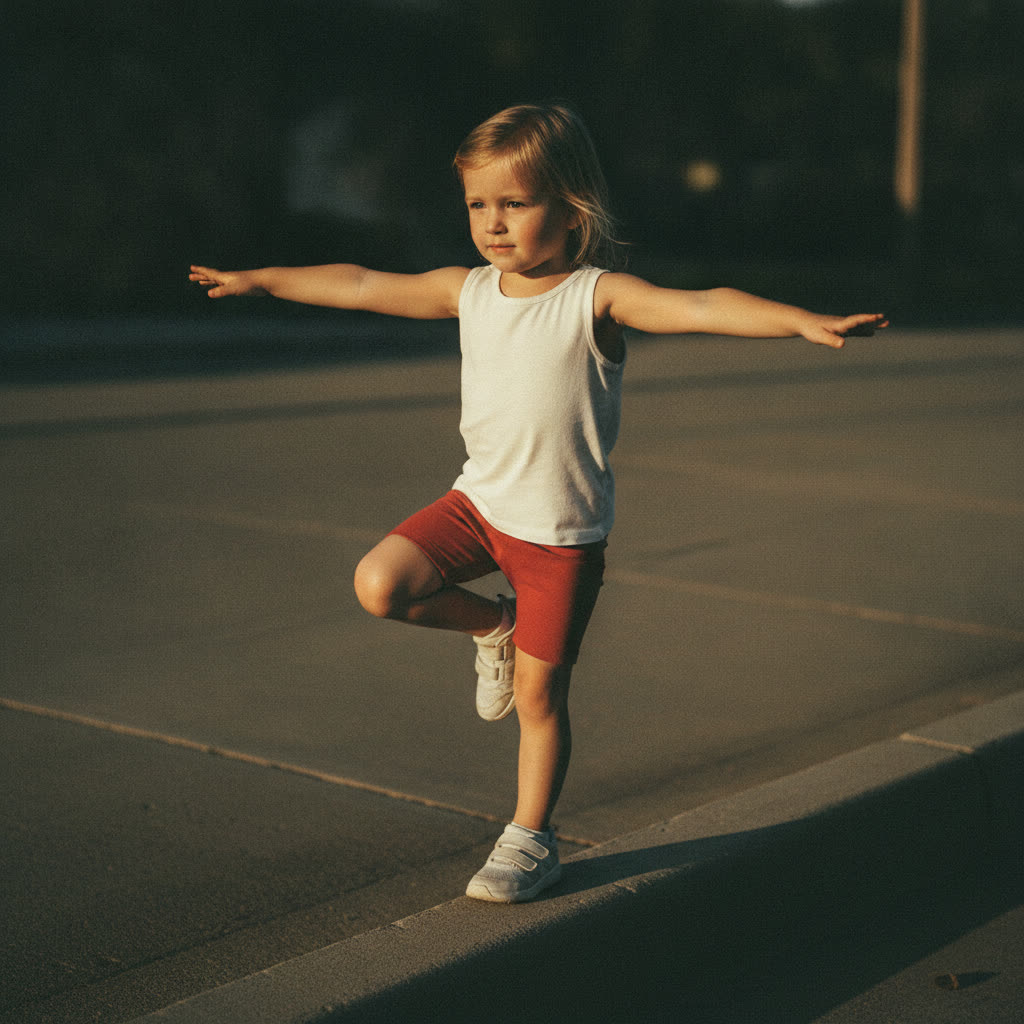
Child walking a curb with eyes up, floating
Good · eyes up, floating
Gaze on the horizon, tall and calm, arms easy. The feet are doing the work.
Child on a curb staring down at their feet, hunched
Watch · eyes glued to the feet
Staring down, hunched, tense — trusting the eyes, not the feet. The #1 thing to fix.
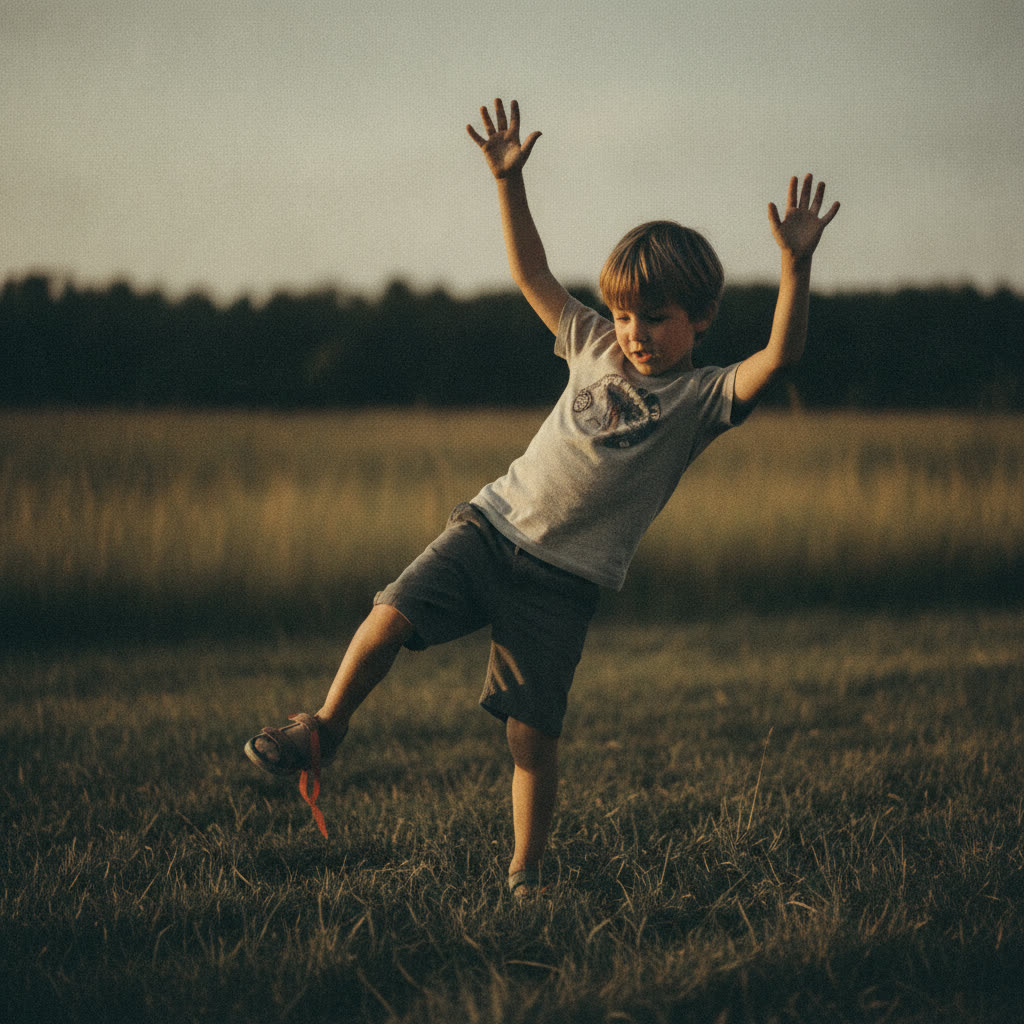
Child in a steady, quiet one-leg stand
Good · quiet, still hold
One leg, arms level, body still. Balance that no longer needs a fight.
Child losing balance, arms windmilling, foot tapping down
Watch · windmilling & tapping down
Arms flailing, foot taps to catch — borrowing stability they haven't earned yet.
2 · RUN IT

The flow.

Setup

A line + a soft floor

A curb, a chalk line, a 2×4 in the grass, a low beam. Grass or mat around it — the soft landing is what lets them push the edge.

The play

Walk it, then hold

Heel-to-toe along the line, eyes up. Then a one-leg hold at the end. Then the level-ups (section 4). Keep it a tightrope, a canyon, "the floor is lava."

Dosage

Sips, not sessions

A minute here and there — every curb on a walk, one-leg while brushing teeth. Stop while it's still fun; balance is built in reps across the day, not a drill.

Make it a game

Give it a story

"Cross the canyon without falling in." "Statue on one leg — freeze!" "Beat your record." The game sets the challenge; you never have to say "balance better."

3 · COACH IT

Best practices.

The cue

"Eyes up — look across the room, not at your feet. Float." One picture, not a body-part instruction. The gaze up is what flips them from trusting eyes to trusting feet.

Watch for

Grabbing for support · stepping off the line · arms windmilling · eyes glued to the ground · can't hold the one-leg. Pick the one that shows most — don't call out all of them.

The fix

"Look at something across the room." Too hard → widen the line (a plank flat, not on edge) or a hand only at the very start. Then take the hand away.

Parent traps

Holding their hand the whole way (that's the training wheel — it starves the wobble) · saying "be careful!" (makes them look down and tense up) · trying to talk them into balancing (you can't — set the constraint instead).

Keep it play

The wobble is the training — let them wobble on a safe surface, don't rescue every teeter. Celebrate a good save as much as a clean walk.

4 · WHERE YOU ARE → WHAT'S NEXT

The climb.

One ladder for every age — a 2-year-old lives at the top rungs, a 6-year-old in the middle. Mastery moves you, never age. The tell that it's time to level up: they do it smooth, eyes up, no grab. Then change one thing.

baseQuiet two-foot stand → brief one-leg, eyes open
challengeWalk the curb/line heel-to-toe · reach past your base and come back without stepping
layerOne leg on something wobbly · recover a gentle nudge without stepping
layerEyes closed single-leg (you spotting) · recover a real trip · turn the head while balancing
layerBalance under a task — catch a ball on one leg · a surprise "freeze!" while walking the line
TOO EASY? THE 2×4 LADDER — CHANGE ONE THING

Change one thing at a time — narrow the base, OR take vision, OR add a task, OR add a surprise. Never stacked:

  • Backward, then sideways — walk the line in reverse, then side-step along it.
  • Turn around mid-beam — stop in the middle and pivot 180° without stepping off.
  • Beanbag on the head — walk with a beanbag balanced on the head; don't drop it (forces eyes up, a tall spine).
  • Catch a ball while walking — someone tosses a ball to catch and throw back while you keep walking the line.
  • Freeze on one leg — stop mid-beam and hold a one-leg stand for a count, then keep going.
  • 2×4 on edge — flip the board to the narrow 1.5″ edge; the whole ladder restarts, harder.
  • Eyes closed — walk (or one-leg hold) with eyes shut, board flat, you spotting — trust the feet.

The grass is your safety net — let them push it.

What it unlocks — a dozen doors.

One balance foundation, and the whole horizon opens up.

Balance is the hard part master it and these come fast
Pedal bike — no training wheelsScooterSkateboardSkatesSki / snowboardSurfSlacklineUnicycleGym beamTrampoline
Balance is a big share every single-leg moment in sport
SprintingCutting & pivotingKicking a ballJump & stickAgilityClimbingDanceMartial artsYoga
For life the quiet stuff that matters most
Ankles that won't rollRecover a tripCarry on rough groundMove without fearBody confidence
THE WHOLE TRUTH · SO YOU DON'T OVERPROMISE

Faster, not instant. Balance is a library of trained solutions, not one magic trait — the general foundation transfers (weight-shift, comfort on a moving base, fall-recovery), but each sport's specific skill (the ollie, the ski carve, the slackline walk) is still learned in the sport. A balance-first kid gets comfortable faster and safer — not pre-made. So train the range: many surfaces, directions, eyes open and closed.

And none of these is "just balance." A skateboard needs balance + reactive strength + coordination + deceleration + a little courage. Balance is one essential door — the activity needs the whole set. That's why every foundation opens these same doors from a different side, and why the play is where they all show up together — the test.

5 · THE COACH'S CRAFT

Six rules that make you the coach.

1

Set a game, not a joint angle

The constraint (a line, "float," "the floor is lava") pulls the form out. You never coach body parts.

2

Do it with them

Walk the curb too. Connection isn't a nicety — a warm, together rep is worth three done as a chore.

3

Watch one thing

Spot the single loudest tell (usually the eyes). Not everything at once — that's overwhelming, not coaching.

4

Fix with a game

"Look across the room," "don't spill the water" — a picture or a rule, never a correction.

5

Progress, not perfection

Their own climb, one change at a time. A wobbly rung they're pushing beats a clean one they've outgrown.

6

Stop before sloppy

End while they still want more (and on any pain). You are the scorer — read the body, not the clock.

This is one of the six. Run the stations → · the full Start Here. The rest — hang, crawl, carry, jump & stick, throw — get their own coach-the-coach page next.