4 · WHERE YOU ARE → WHAT'S NEXT
The climb.
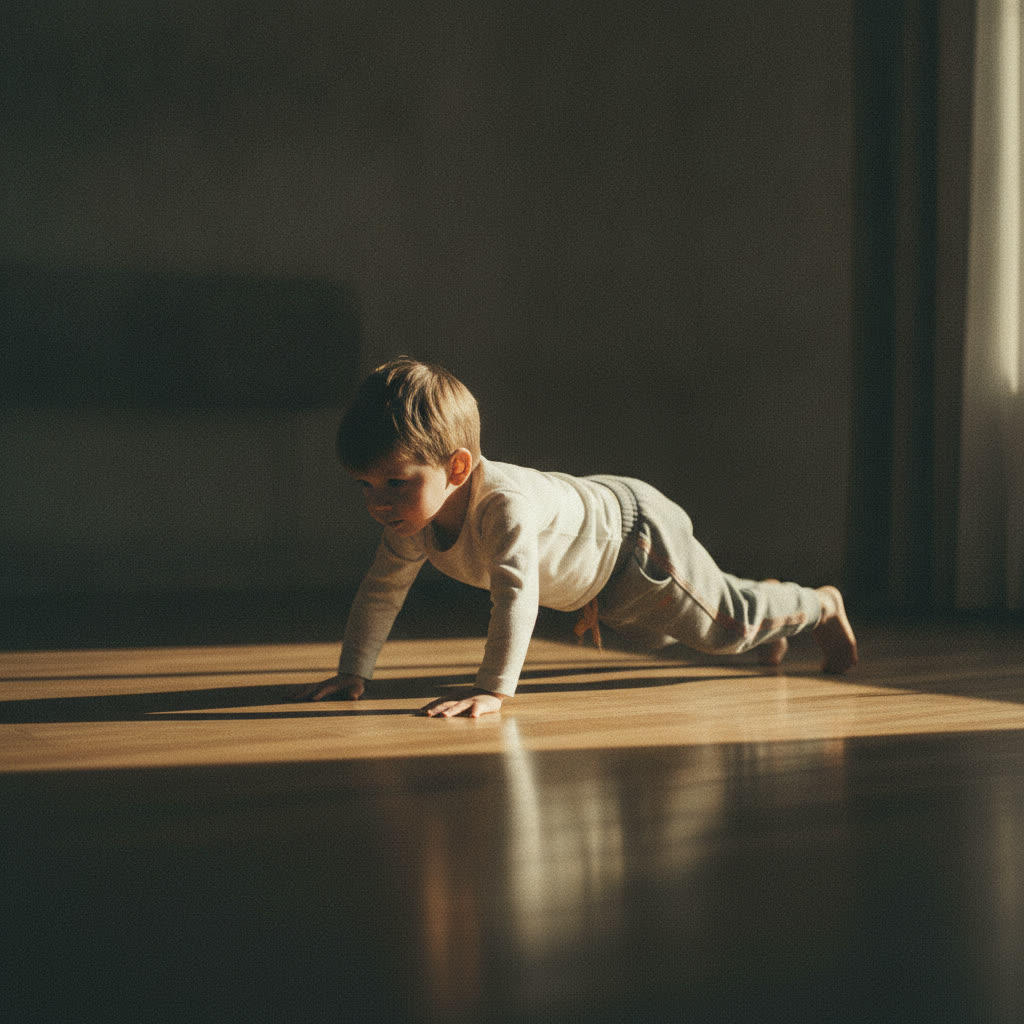
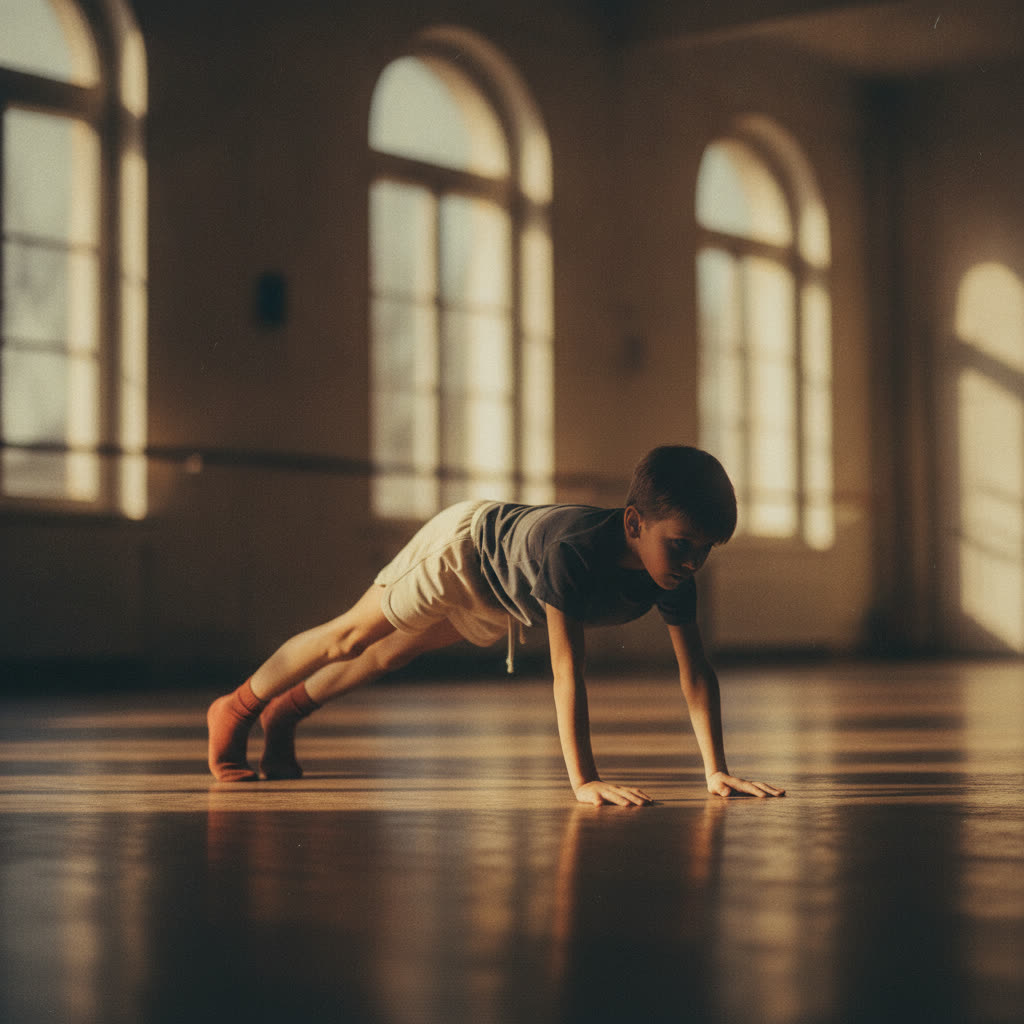
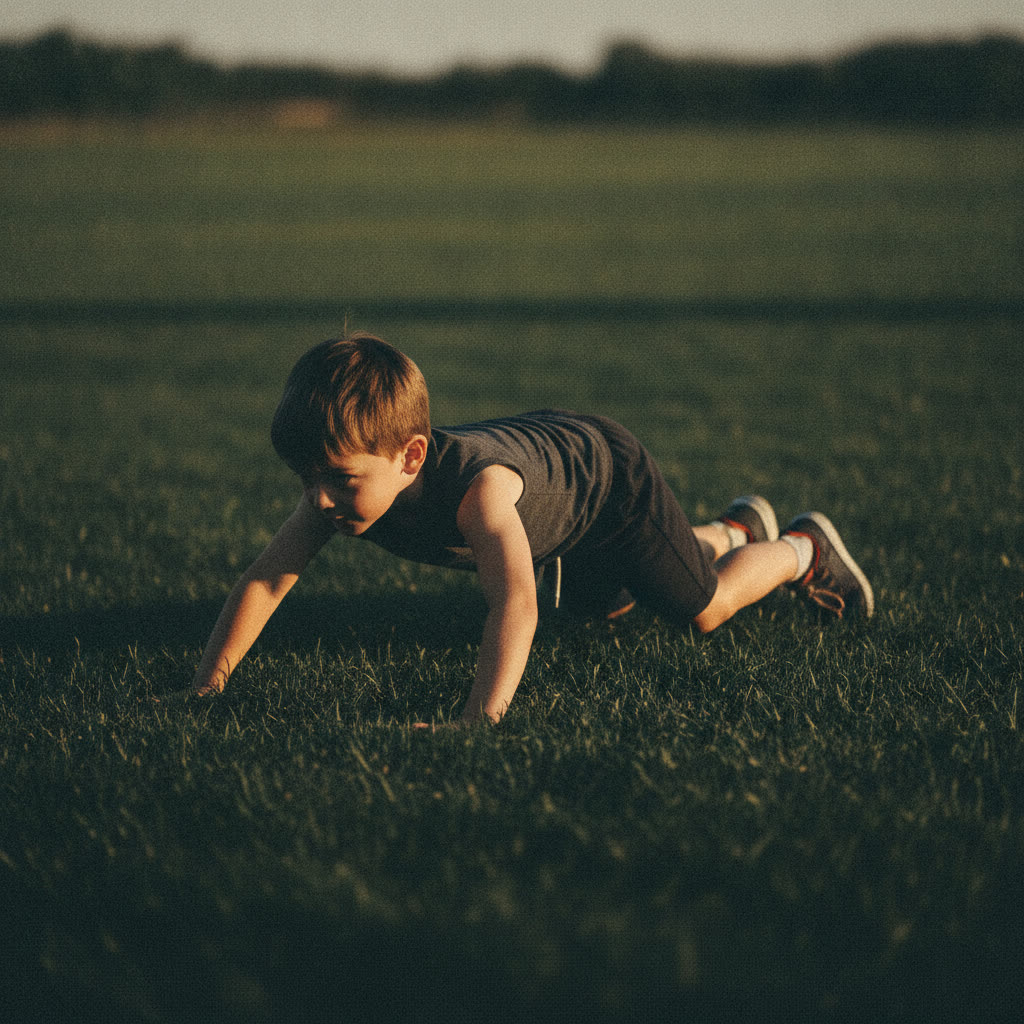
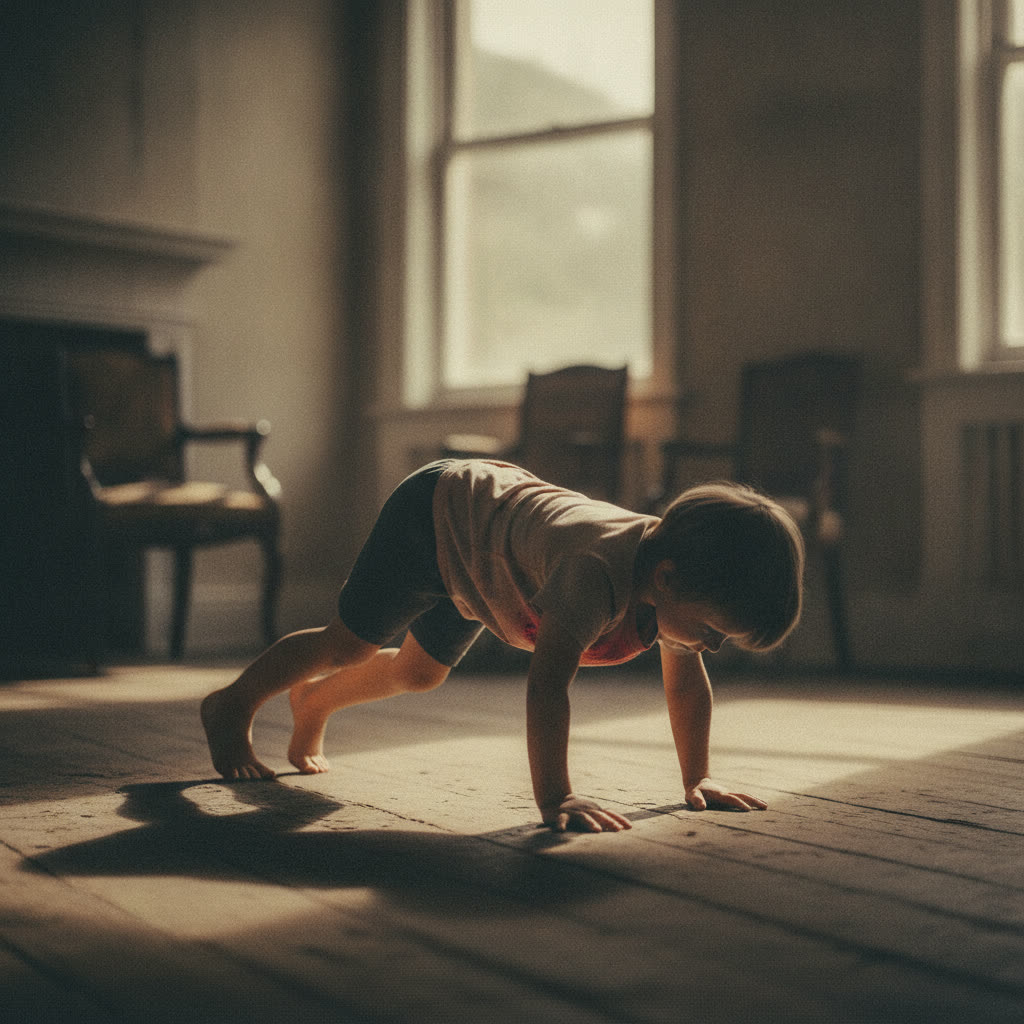
One ladder for every age — a baby rocks and creeps, a 9-year-old runs an animal-flow course. Mastery moves you, never age. The tell that it's time to level up: they do it flat, quiet back, opposite hand and foot. Then add one demand.
baseRoll → rock → creep (the developmental base)
challengeClean bear crawl — flat quiet back → crab walk — hips up
layerMoving crawl with direction changes
layerCrab walk · lateral & backward crawls
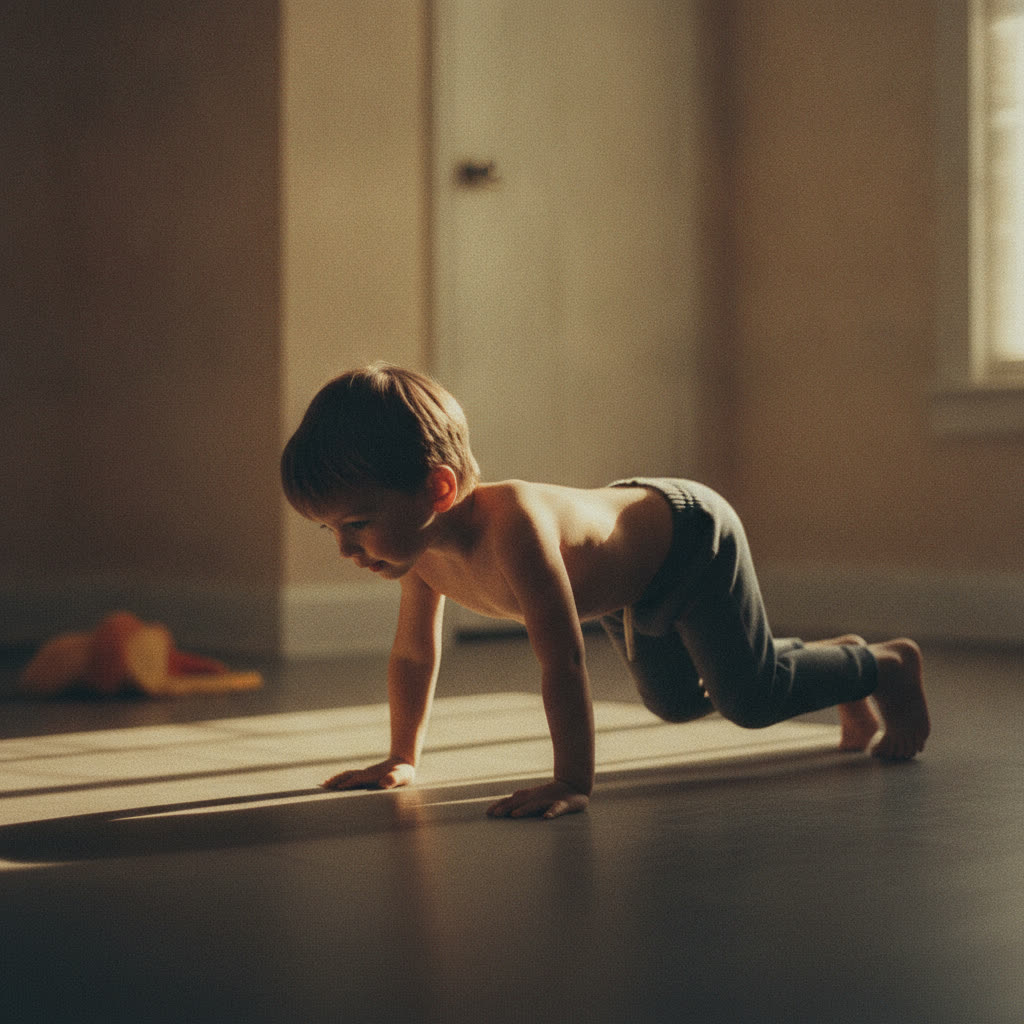
layerHover-crawl (knees never touch) → animal-flow sequences
TOO EASY? LEVEL UP
Add one at a time — each keeps the flat, quiet back and adds a new demand:
- Backward, then sideways — bear-crawl in reverse, then laterally; same flat back, new direction.
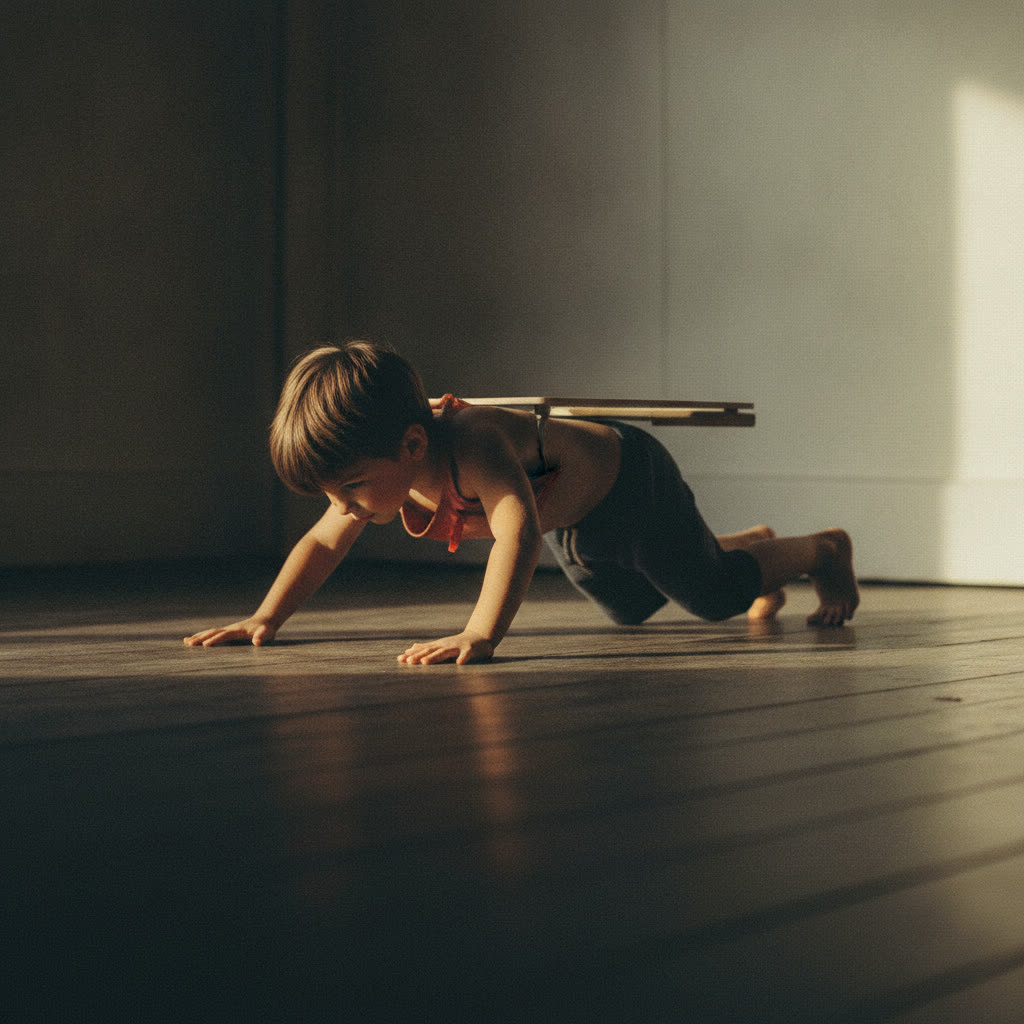
- Beanbag on the back — crawl with a beanbag on the flat back; keep it from sliding off (kills the hip sway).
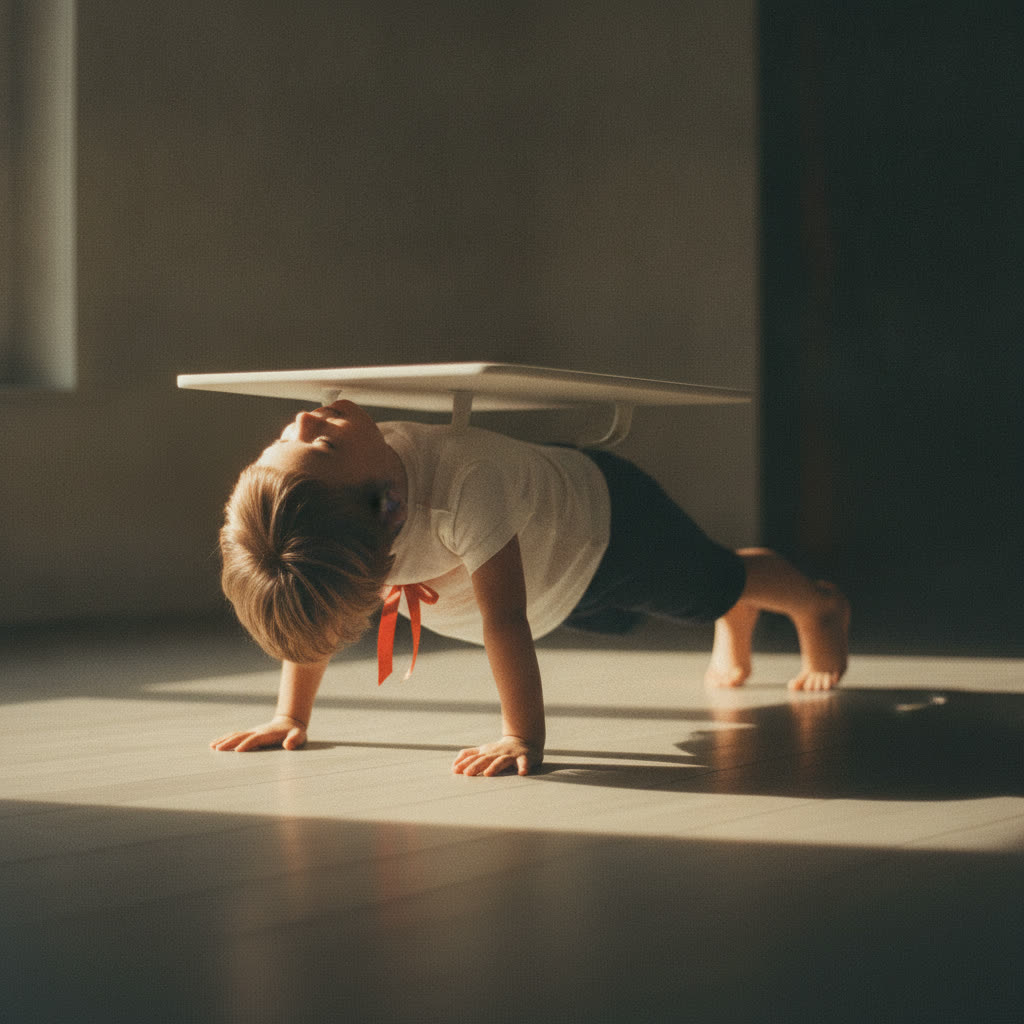
- Under a lava line — crawl under a string or broom held low; forces lower hips and a flatter back.
- Hover-crawl — bear-crawl with the knees floating an inch off the floor the whole time — never touching.
- Animal-flow course — chain bear, crab, and lateral crawls into a flowing obstacle course.
The floor is free — let them push it.
What it unlocks — the cross-body engine.
Own the cross-crawl, and every fluent, coordinated way of moving opens up.
Crawl is the base master it and these come fast
Running — the cross-crawl gaitSwimming — opposite-limb strokeGymnastics floorParkourGrappling / wrestlingClimbing
It shows up everywhere the wiring under fluent movement
All locomotionCross-body coordinationShoulder & wrist strengthCore under load
For life moving well
Getting up off the floor easilyFluid, coordinated movementBody awareness
THE WHOLE TRUTH · SO YOU DON'T OVERPROMISE
Myth flag: crawling does not make kids smarter, boost reading or IQ, or prevent dyslexia — that's the debunked Doman / Brain-Gym claim, and the AAP says there's no evidence for it. It's a motor foundation only. Don't sell it as brain training.
And none of these is "just crawl." Running needs crawl-coordination + reactive strength + balance; every foundation opens these same doors from a different side, and the play is where they combine — the test.