1%
Stations · Coach the Coach
COACH THE COACH · THE HANG

Coach the
hang.

Here's the flip most parents get backwards: you don't wait for a kid to be strong enough to hang — the hang is what builds the strength. Kids have huge strength-to-weight; a toddler can hang today. The bar isn't earned, it's the tool. This page teaches you to coach the one thing that matters — an active hang, not a limp dangle — spot the tell, and climb.

▶ Run the station Where you are & what's next
1 · SEE IT

What good looks like.

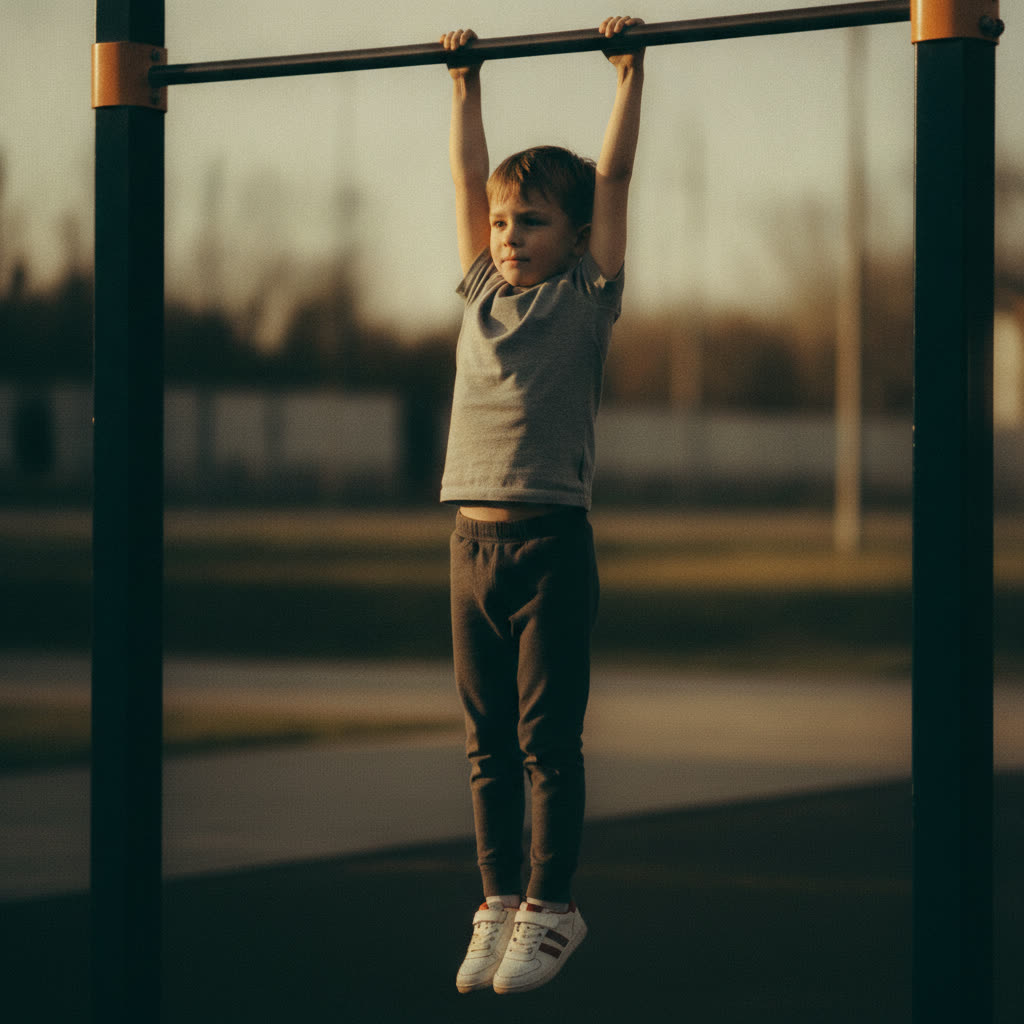
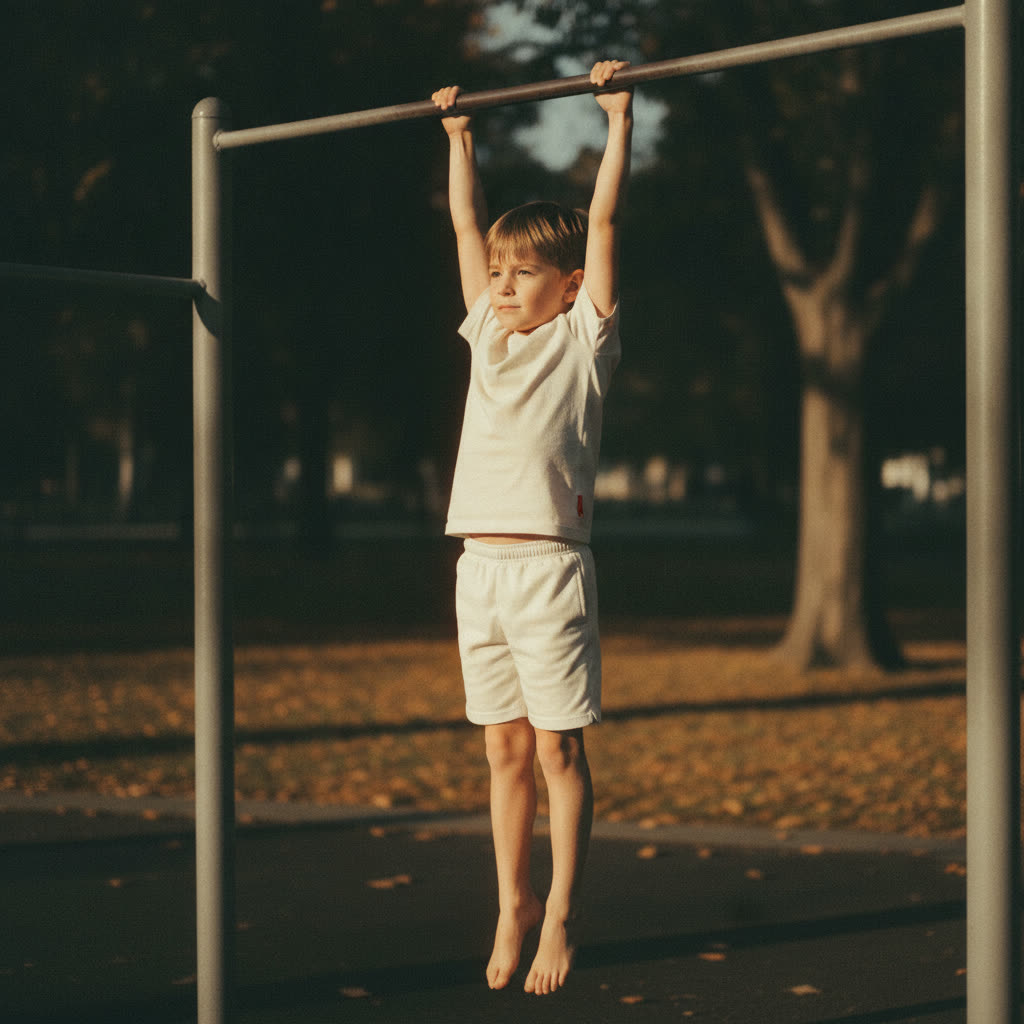
A good hang is long and tall. The arms are straight, the body hangs long, and — the money detail — the shoulders are pulled DOWN and switched on (packed away from the ears), not shrugged up in a passive slump. Cue it as a picture: "hang like you're being gently stretched taller."

The climb runs from a sloth-hang to hanging knee-raises to swinging hand-over-hand — but it all sits on one thing: shoulders on.

Hang · the flow
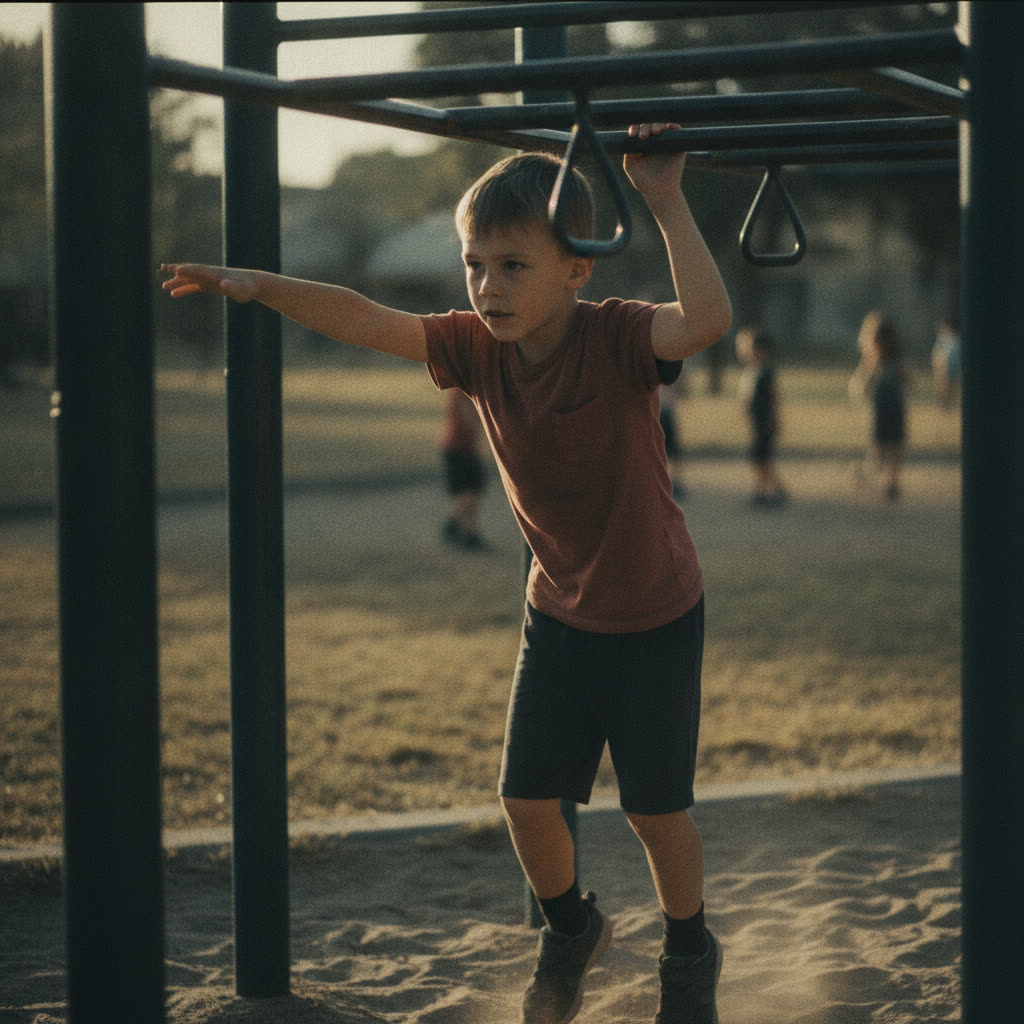
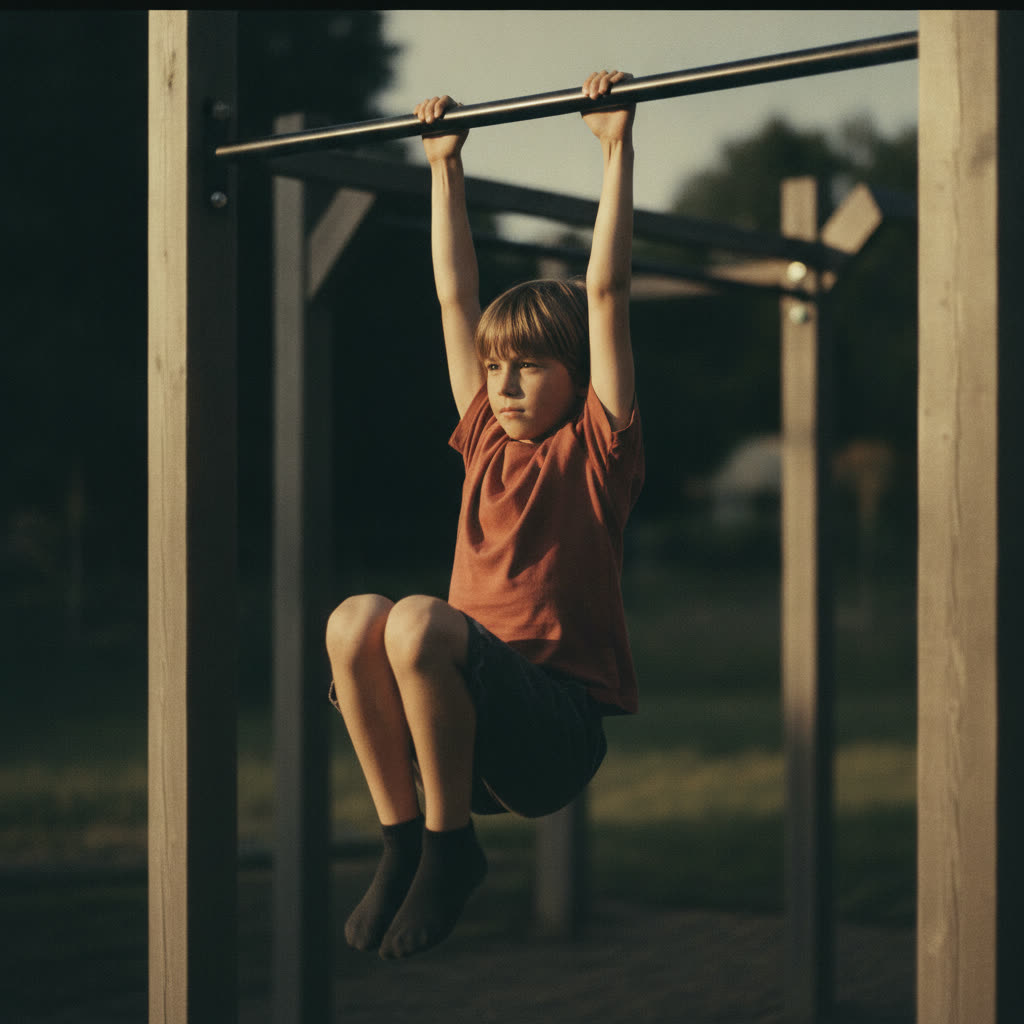
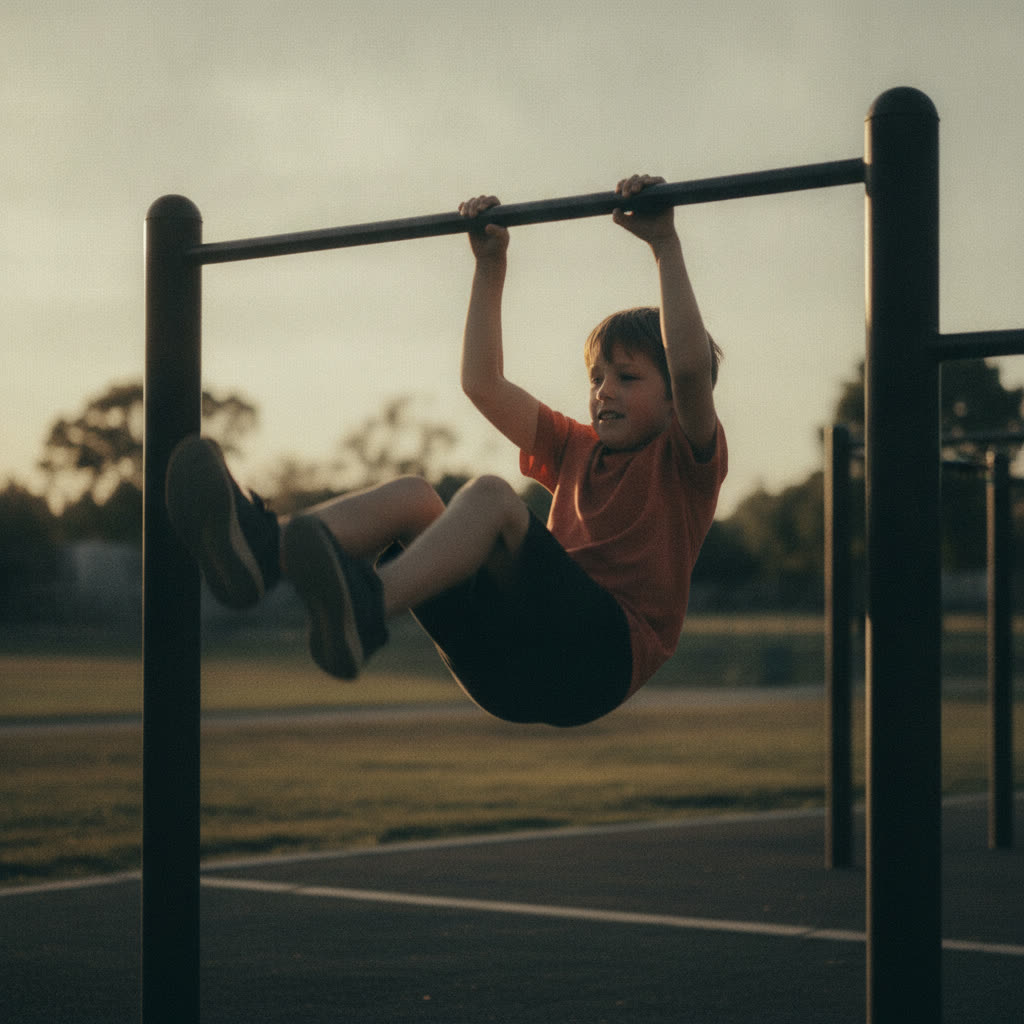
A child in a clean active hang, shoulders engaged A child doing a hanging knee-raise A child traversing monkey bars
Active hang · shoulders ON

Good vs. the tell — train your eye.

Two faults you'll actually see. Spot them and you're coaching.

Child in an active hang, shoulders packed down
Good · shoulders ON
Arms long, body tall, shoulders pulled down away from the ears. Active, not just dangling.
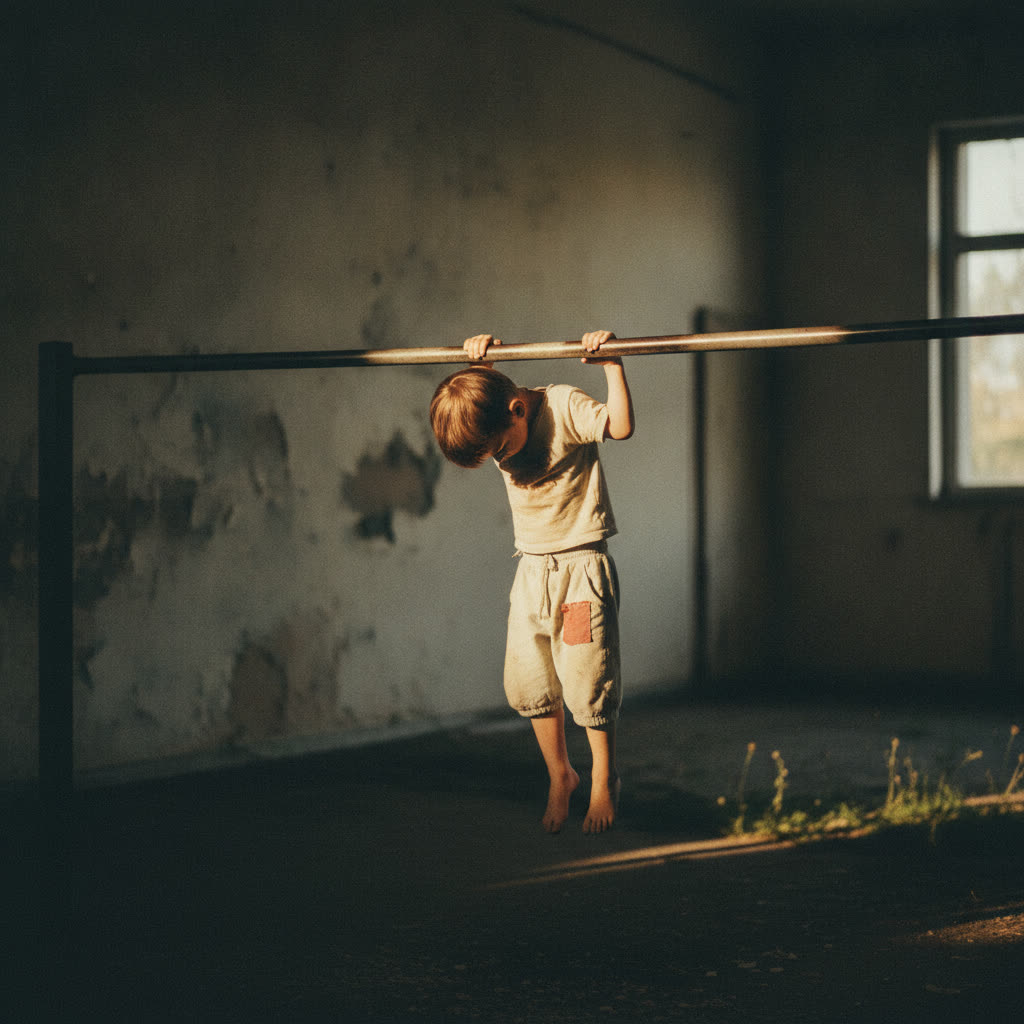
Child in a passive dangle, shoulders shrugged to the ears
Watch · shrugged & slumped
Shoulders shrugged up, head sunk between them, body limp — a passive dangle. Cue "shoulders down."
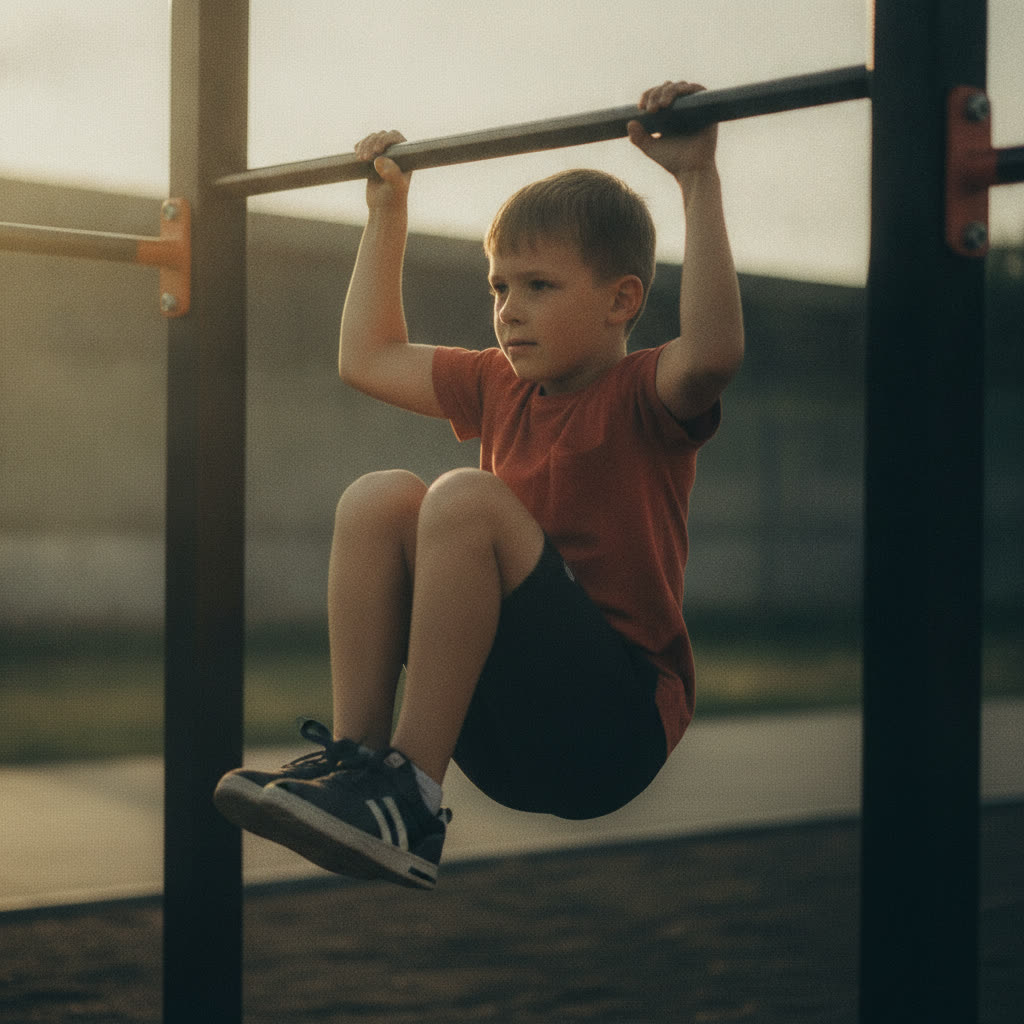
Child doing a controlled hanging knee-raise
Good · controlled
Still and in command — a clean knee-raise, tight core, no borrowed swing.
Child swinging and kipping wildly on a bar
Watch · kipping & swinging
Flailing to fake a hold with body momentum. If they're swinging to hang on, drop back a rung.
2 · RUN IT

The flow.

Setup

Something to hang from

A $20 doorway bar, monkey bars, gym rings, a sturdy low branch. Deep soft surface underneath — and for littles, feet near the ground (a "sloth hang").

The play

Just hang

Get on the bar and hold. Then switch the shoulders on (active hang). Then knee-raises, then swing hand-over-hand. "Sloth on the branch," monkey-bar tag, "beat your record."

Dosage

Short & often

Grip fatigues fast — so a few seconds, many times a day. Hang on the way past the doorway bar. It's self-limiting: when the grip goes, they drop. You can't over-do a hang.

Make it a game

Give it a challenge

"Beat your record." "Hang like a sloth." "How far can you travel across the bars?" The challenge does the work — you never say "grip harder."

THE SAFETY LINE

Deep, soft surfacing under any bar (never concrete) — monkey bars are a top cause of playground arm fractures. No ballistic drops onto a straight arm. Ages ~3–5: upright / sloth hangs, feet near the ground. Inverted "bat" hangs ~6+, with a hands-on spot over matting. Bodyweight hanging is growth-plate-safe (AAP) — the hazard is the fall, not the hang.

3 · COACH IT

Best practices.

The cue

"Pull your shoulders down away from your ears — hang tall, proud chest." A picture, not "engage your lats." The shoulders-down is the whole difference between an active hang and a dangle.

Watch for

Shoulders shrugged up to the ears (passive) · frantic re-gripping · dropping the second it's hard · swinging / kipping to fake a hold. Coach the one that shows most.

The fix

"Shoulders down, hang tall." Too hard → feet-near-the-ground sloth hang so they take some weight off. Then let the hold time grow on its own.

Parent traps

Making them "earn" the bar with strength first — backwards; the hang builds the strength · pulling them off too soon · rushing to pull-ups (own the hang and the hold first) · over-cueing the grip (let their hands figure it out).

Keep it play

Grip self-limits — they let go when they're done, so you literally can't over-train a hang. Let them hang on everything: branches, rails, monkey bars, the doorway bar.

4 · WHERE YOU ARE → WHAT'S NEXT

The climb.

One ladder for every age — a toddler sloth-hangs, a 9-year-old traverses. Mastery moves you, never age. The tell that it's time to level up: they hold it clean, shoulders on, no swing. Then add one demand.

baseSloth hang (feet near the ground) → full passive dead hang, feet off
challengeActive hang — shoulders 'on', breathe, hold longer
layerHang + knee-raises · reach one hand off and swap
layerTraverse / brachiation — swing hand-over-hand across the bars
layerPull-up → feet-up L-hang → one-arm progressions (the IG-kid tier)
TOO EASY? LEVEL UP — WHAT THE LEGS DO

Each combo keeps the grip working and hands the legs a job. Add one at a time:

  • Hold longer, shoulders on — active hang, shoulders pulled down; hold for time and breathe.
  • High-knees — hang still and lift both knees to your chest, lower slow. The legs work; the arms stay quiet.
  • Kick a ball — hang, and kick a ball someone rolls or tosses to your feet. The legs swing out to strike while the grip holds.
  • Reach one hand off — let go with one hand, touch your opposite shoulder (or a hanging ring), then swap.
  • Traverse — move hand-over-hand sideways along the bars.
  • One-arm holds — build toward hanging from a single arm. (A one-arm hang comes way before a one-arm pull-up — chase the hold, not the pull.)

What it unlocks — the whole pulling world.

Own the bar, and every hanging, climbing, pulling thing opens up.

Grip is the hard part master it and these come fast
Climbing — trees & rockNinja / OCR coursesGymnastics bars & ringsMonkey barsRope climbBouldering
Grip is a big share the hand behind the skill
Carrying heavy thingsPull-upsRacket & bat gripGrappling / wrestlingSwimming — the pullRowing
For life the quiet strength
Strong hands (jars, bags)Shoulder health & postureNot dropping thingsConfidence off the ground
THE WHOLE TRUTH · SO YOU DON'T OVERPROMISE

None of these is "just grip." Climbing needs grip + shoulder stability + core tension + a little courage. Grip is one essential door — the activity needs the whole set. That's why every foundation opens these same doors from a different side, and why the play is where they all show up together — the test. (And grip radiates: a strong grip quietly potentiates every pull and carry — one of the two great multipliers.)
5 · THE COACH'S CRAFT

Six rules that make you the coach.

1

Set a challenge, not a grip cue

"Beat your record," "travel the bars." The challenge pulls the effort out — you never coach the hands.

2

Do it with them

Hang next to them. A warm, together rep beats three done as a chore — and they'll copy you.

3

Watch one thing

Spot the loudest tell (usually the shrug). Not everything at once — that's overwhelming, not coaching.

4

Fix with a picture

"Shoulders down," "hang tall," "sloth on the branch" — an image or a game, never "engage your scapula."

5

Progress, not perfection

The hold before the pull. A longer clean hang today beats a sloppy pull-up they're not ready for.

6

Let the grip be the clock

They drop when they're done — that's the limit, self-set. Stop on any pain. You read the body, not a number.

Two of six now live. Coach the balance → · Run the stations · the full Start Here. Crawl, carry, jump & stick, and throw get their pages next.